Wednesday, July 1, 2015

16 Step Checklist for the Perfect Blog Post

16 Step Checklist for the Perfect Blog Post written by John Jantsch read more at Small Business Marketing Blog from Duct Tape Marketing

perfect blog post checklist

You work hard to create content – sometimes on the fly in the midst of the raging storm that is entrepreneurialism.

In the rush to get the thing out though you can diminish its impact through oversight and sloppiness. You might even do your brand more harm than good. And then all that hard work has less payoff.

Use this sixteen-point checklist as a guide to help establish a pre-publish blog post/page routine so you can hit publish with incredible confidence.

☐ Keywords – Do you have a plan for optimizing certain keywords and phrases as the focus for this post? (Yoast SEO Plugin helps analyze if you’ve used these phrases in the right amount.)

☐ Grammar and Spelling – Have you proofed your post to catch typos and embarrassing grammar missteps? (Check out Grammarly – it will check you as you go.)

☐ Headline – Have you spent time writing an appealing headline? Use strong adjectives and action packed benefit statements.

☐ Hook – Does your first paragraph draw the reader into the payoff even you spend the next ten paragraphs setting it up?

☐ H2, H3 – Have you made your post scannable by breaking it into subsections and lists with H2 and H3 formatting to help with readership and let Google know what’s important?

☐ Permalink – Have you changed your permalink to include your keyword rather than simply use the default permalink post title?

☐ Links – Have you looked for ways to link internally to related posts or externally to resources that add value? Have you used keywords in the anchor texts of these links?

☐ Category – Have you chosen an appropriate category that matches up with your core themes? Categories can help organize and produce their own feed to use in other ways.

☐ Tags – Have you tagged the content to include people, things or resources you’ve mentioned?

☐ Featured Image – Have you included a compelling image and chosen it as your featured image? The image in this post was created using Canva.

☐ Image alt attribute – Have you written an alt attribute to describe your image in terms of your keywords?

☐ Title – Have you written a title attribute that uses your keywords? (This is a feature of a good plugin such as WordPress SEO Plugin by Yoast.)

☐ Meta Description – Have you written a description that might entice someone to click through if they read it in search engine results? (Again Yoast)

☐ Author – Have you chosen the correct author if you have multiple authors for the blog?

☐ Preview – Have you looked at a live preview just to make sure everything is as it should be?

☐ Publish – Have you hit the publish button?

Okay, now go out there and promote the heck out of your perfect post!

5 Subtle Yet Super Powerful Copywriting Tips

mr-miyagi-copywriting-advice-650
Copywriting is a bit like martial arts; you don’t need to take aggressive action to see results. Image source.

Marketing can be like martial arts.

In a fight, you can floor your opponent with brute force.

You can throw a burst of punches and strikes, or grapple until you’re blue in the face. Or you can calmly step back, target one of your opponent’s pressure points, and quickly end the fight with one swift strike.

Marketing your business is the same.

You can grow by taking aggressive action. You can crank out more content, or pay for ads and leads to increase traffic. Or… simply step back and target the “pressure points” in your marketing by finding small tweaks that create big wins.

One of the best ways to get big wins from small tweaks is to focus on converting more prospects into customers by strengthening your copy.

But not all copywriting tweaks are created equal.

You can spend hours tweaking the wrong things and get weak results, so here are five simple but effective ways to ramp up your conversions by cranking up the power of your copy… Mr. Miyagi style.

1. Use open loops to seduce your prospect

Ever had an awesome TV show that you couldn’t stop watching? A series of books that you couldn’t put down?

You have? Congratulations, you’ve experienced the power of open loops (also called the Zeigarnik effect).

Open loops prey on our brain’s natural desire for completion.

You see, the brain enters a state of confusion or tension when it views something as incomplete. The cause could be a story, a question, even a household chore that you forgot to complete — and the only way to overcome that confusion and tension is for your brain to close the open loop.

When it comes to writing copy, an open loop is a part of your sales message that doesn’t tie up immediately.

You can apply open loops to any copy and instantly make it more magnetic.

Here’s an open loop example from the CopyHour landing page.

copywriting-copyhour-landing-page

The writer starts the sales letter with talk of a mysterious little secret that top copywriters used to sharpen their chops, and as a result make bucket loads of cash – instantly making you wonder what this secret is.

But it doesn’t stop there. The sales page goes on to constantly dangle this secret right in front of your face. This strengthens your curiosity and makes you more invested in finding out what the mysterious secret is – increasing the chance of a conversion.

Open loops aren’t hard to implement.

The easiest way to get started is to ask more questions in your copy and vaguely expand on the question, just like the example above. This lack of completion makes your reader feel curious and more invested in your copy.

2. Make your first sentence hypnotic

Your first sentence has to open with a bang.

It has to immediately snag your audience’s attention and drag them into your copy. If your readers don’t make it past the first few sentences, they sure as hell ain’t making it to your call to action.

Shortening your sentences (and your first sentence in particular) is an excellent way to make your copy a little bit more engaging.

The trick is to make sentences so short and easy to read that they instantly suck your reader into your copy. In his book Advertising Secrets Of The Written Word, legendary copywriter Joseph Sugarman even said:

My first sentences are so short, they almost aren’t sentences.

Take for example the opening sentence on Chartbeat’s landing page for their study on audience development.

copywriting-chartbeat-audience-development

Have a look at how short and simple the opening is:

It’s not enough to just count clicks and page views anymore.

When someone begins by reading that, they’re naturally inclined to wonder, “What is enough then? What’s wrong with counting clicks and page views? What should I measure?” 

These questions then fuel the reader with enough coals of curiosity to make him want to read on.

Also, shorter sentences look like a piece of cake to read, which increases the chances of someone actually getting through your copy. This is a huge benefit because it’s harder to stop reading copy once you’re already interested and curious.

3. Deploy power verbs for maximum impact

Good copy paints pleasing pictures in the minds of your prospects. It dives into their brains and engages their senses and emotions.

This is where most writers make a fatal mistake. They rely on adjectives and limp words to add flavor to their copy, but as killer copywriter John Carlton said in his book Kick Ass Copywriting Secrets:

Good copy goes light on adjectives. And heavy on action verbs.

The right action verbs give your copy a muscular, grab-you-by-the-throat effect that keeps your reader glued to the screen.

The example below shows the difference between fluffy adjectives and power verbs in creating vivid mental images:

The stomach-turning news was extremely shocking. All of a sudden, he didn’t feel very good. He quickly sat down on the large black sofa and passed out.

After powering up with verbs:

The news hit him like a sharp hook to the stomach. He felt his heart rip, and an ocean of darkness washed through him as he collapsed into the sofa.

Big difference, right?

When it comes to descriptive power and sharp imagery, the second paragraph leaves the first, adjective-infested one coughing in the dust.

Here are some examples of powerfully “verbed-up” sentences from Jon Morrow’s Serious Bloggers Only landing page:

copywriting-jon-morrow-serious-bloggers

Pay attention to some of the verbs he uses:

  • Because they stumbled into popularity
  • They are desperate to seize the opportunity before it slips away from them.
  • If you’re a serious blogger, you’re tired of wading through thousands of articles, reading contradictory advice, and trying to figure out how to piece it all together.

See how alive and vivid the writing becomes with just a few well-placed sharp, powerful verbs?

Keep a thesaurus handy at all times, and be sure to have a swipe file on standby. This will help you inject strong verbs and words into your copy without ripping your hair out in frustration.

4. Adhere to the AIDA formula

When writing copy, it’s easy to find yourself staring at a blank page wondering, “What’s next?”

That’s where the AIDA formula (by copywriter Gary Halbert) comes in handy.

It’s a formula that allows you to consistently create a smooth, strong sales message that latches onto your reader’s attention and keeps them interested.

So what does AIDA stand for?

  • Attention. This is where you snag your prospect’s attention with a benefit-driven headline and introduction to make him want to read on.
  • Interest. This is where you’ll pique the interest of your prospects and nudge them deeper into your copy by describing how your pain solving product/service benefits their lives.
  • Desire. After arousing your prospects interest, here’s where you pump up his desire for what you’re selling. Usually with a bullet point list that describes all the juicy benefits of your product/service.
  • Action. After your reader is blown away with the amazing benefits your product, you then invite him/her to take action. Usually to make an order or fill in a form.

Here’s an example of the AIDA formula in action from the webprofits.com landing page.

Attention

copywriting-webprofits

The headline is curious and grabs the reader’s attention by suggesting that the SEO game has changed.

Interest

Once the page catches the reader’s attention, it cultivates interest with paragraphs which explain how SEO has changed (next to the laptop).

Desire

After that, it arouses the prospect’s desire by describing the benefits of the product.

copywriting-webprofits-benefits

Action

It finally closes with the “Get Free Analysis Now” call to action.

copywriting-webprofits-free-analysis

Following the AIDA formula inserts a smooth compelling flow into your copy and keeps readers glued to your sales message.

5. Harness the power of reframing to shoot up perceived value

A 1999 study by psychologists Davis and Knowles showed the shocking persuasive power of a technique called reframing. In the study, they went door to door and sold note cards for charity.

  • In the first pitch, they said that it was $3 for 8 cards. They made sales at 40% of households.
  • In their second pitch, they told people that it was 300 pennies for 8 cards, which was followed up by, “which is a bargain,” resulting in 80% of the households buying cards.

This tiny change in the pitch had a huge effect on results, but how and why was it so influential?

Here’s what happens:

When people are told the cost of the cards is 300 pennies instead of 3 dollars, their routine thought process is disrupted. Now, while they’re distracted trying to process the odd sounding “300 pennies” and why anyone would use pennies instead of dollars…

They’re immediately told that it’s a “bargain.” And because pennies sound so easy to spend in comparison to hard-earned dollars, they are more likely to accept the suggestion that the cards are a bargain.

This is known as reframing.

Reframing is a wickedly effective technique. It allows you to manipulate the perceived value of a product by making comparisons and shifting the focus of your reader.

Here’s an example of what reframing looks like:

copywriting-reframing-example

You wouldn’t rush to buy something that’s $500 a year right? I mean for most people, it’s a decent amount of change.

How about for $42 a month?

Or $8 (the price two lattes) a day?

Sounds much more appealing doesn’t it?

This landing page reframes the price of a brand new car in terms of two lattes per day ($8), which serves to soften the blow of the price and make the offer more appealing.

Here’s another example from the CopyHour landing page:

copywriting-copyhour-reframing

The landing page reframes the price by comparing the total price of the course to how much it costs per day, instantly reducing the weight of the price in the prospect’s mind.

Crafting seductive landing page copy doesn’t have to be painful

Powerful landing page copy doesn’t have to be painful to create. Pick a couple of strong techniques and tips, focus on the needs of your prospects, and you’ll be fine.

Now it’s your turn. How do you go about cranking up your copy power to increase conversions? What’s the weirdest conversion boost/decline you’ve had with regards to copywriting? I’d love to know!


anigif_enhanced-buzz-32309-1353011666-19

What’s Holding CMOs Back When It Comes To Push Mobile Marketing

Push notifications are the official way for brands to reach users through an app since the operating system—such as Apple iOS or Google Android— doesn’t provide user email addresses or phone numbers. Their ability to provide information to aid in personalization makes push notifications one of the most important tools in the marketing toolbox.

All sounds great, right?

So why then are some CMOs reticent to implement a push mobile marketing strategy?

In our new guide, The CMO’s Guide To Mobile Marketing we identify several concerns that CMOs often have about investing in push— and solutions to overcoming those concerns:

Concern: Push costs too much to integrate into the workflow and back end.
Solution: Marketers should find a provider with an easy-to-implement SDK—which allows for rapid development—that uses technology to gather signals used for segmenting.

Concern: IT time and costs won’t deliver the desired return on investment.
Solution: Marketers are already focusing on delivering a cross-channel experience by integrating email, display, and SMS. Using multiple channels including push picks up incremental lift. Multi-channel customer interactions are 30 percent more strongly correlated with business outcomes such as customer satisfaction and desire to recommend, when compared to uncoordinated efforts, according to McKinsey & Company.

Concern: Users will be bombarded with messages.
Solution: Some marketers fear that if they implement push notifications, users will feel overwhelmed, leading them to delete the app or turn push notifications off. To combat this, send relevant, personalized notifications by segmenting. Another way to interact with customers without sending spam push messages is through an app inbox. Even if users say they don’t want to get notifications on the lock screen, brands can send offers and promotions to their inbox, bypassing the push alerts. This feature is helpful for reaching users that opt out of notifications and for providing offers that last longer than just one day.

To learn about the other two key aspects we identify: SMS & MMS and Data Management Platforms and how to overcome any concerns you as a CMO may have, download The CMO’s Guide To Mobile Marketing today.

Tuesday, June 30, 2015

#CMWorld Infographic: 12 Marketing Box-Office Titans Share Tips For Creating Blockbuster Content Marketing

Content Marketing World Infographic Header

There’s a special kind of magic to behind-the-scenes photos from movie sets. You can see how a team of special effects wizards transforms a toy model into a spaceship hurtling towards an alien planet, or a lifeless doll into a skyscraper-climbing giant gorilla. Knowing how the trick is done somehow makes the finished product even more satisfying. That’s especially true if you’re a kid with a camera trying to bring your own dreams to the silver screen.

In the newest eBook series co-produced by TopRank Marketing and Content Marketing Institute, we asked content marketing wizards to take us behind-the-scenes and show us how they make their own brand of magic. Their advice is inspiring to anyone who wants to create great content that connects with an audience.

The infographic below contains content marketing tips from the entire eBook triple feature and features 12 of the speakers from the upcoming Content Marketing World conference. Let their expert advice inspire you to create your own blockbuster content marketing.

Here are some tweetable takeaways from the infographic:

Sarah C- 062815
Sarah Compagnoni: “Great content marketing strategy starts well before anyone clicks a link.” @SarahCompagnoni tweet this

j moat
James Moat: “The power of employees generating & sharing content is a greatly undervalued strategy.” @digecomm tweet this

b clark
Brian Clark:
“Put yourself in the customers’ shoes to experience the content marketing journey from their perspective.” @brianclark tweet this

cleve g
Cleve Gibbon: “
Be clear on what you need to say & why it’s relevant to your audience at that point in their lives.” @cleveg tweet this

a handley 62815
Ann Handley:
“Your story is the thing that sets your content marketing apart. What’s your story? And how do you tell it?” @annhandley tweet this

j rohrs 62815
Jeffrey Rohrs:
“Scene stealing content marketing is sales activated, marketing promoted, optimized & reported.” @jkrohrs tweet this

a higgins 62815
Amy Higgings:
“Before publishing content, follow a launch plan checklist to make sure you haven’t left out steps.” @amywhiggins tweet this

k wincko 62815
Ken Wincko:
“Successful content needs to be the 3 C’s: Credible, Compelling, & Consistent.” @KenWincko tweet this

LOdden-619
Lee Odden:
“For content marketing success, make all content accountable & measurable to attract, engage, & convert.” @leeodden tweet this

TWheatland-619
Todd Wheatland:
“Link content marketing strategy to results by using a repeatable process & collecting the measurements that matter, in real-time.” @ToddWheatland tweet this

JFleischer-619
Julie Fleischer:
“Content marketing success starts by first determining what critical measurements drive spending decisions.” @jfly tweet this

jpulizzi - 0619
Joe Pulizzi:
“If you’re trying to measure the value of your content marketing, create a subscription program.” @joepulizzi tweet this

View the Full Infographic Feature

Experience the entire thrill-a-minute eBook trilogy on-demand:

The Big Picture of Content Marketing Strategy

Making Content Marketing the Star of Your Marketing

Measuring Content Marketing Box Office Success

For more information on the speakers and their sessions, check out the Content Marketing World 2015 website.

See you at the movies!


Email Newsletter Gain a competitive advantage by subscribing to the
TopRank® Online Marketing Newsletter.

© Online Marketing Blog - TopRank®, 2015. | #CMWorld Infographic: 12 Marketing Box-Office Titans Share Tips For Creating Blockbuster Content Marketing | http://www.toprankblog.com

The post #CMWorld Infographic: 12 Marketing Box-Office Titans Share Tips For Creating Blockbuster Content Marketing appeared first on Online Marketing Blog - TopRank®.

How to Squeeze Every Drop of Valuable Visitor Data from Your Forms (Without Complicated Programming)

It’s the great marketing catch-22: You need visitor data in order to create value-filled, personalized, highly targeted offers. The more information they provide, the greater your ability to build personas that fit your ideal customers.

But your visitors still aren’t convinced. Like jittery fish, you’ve presented them with the tastiest bait, and they’re hesitant to even take a nibble. So how can you get the information you need without scaring them off?

The answer is…

Progressive profiling.

What is Progressive Profiling?

Progressive profiling uses dynamic form fields to ask for and collect information on prospects based on the information you already have about them. Like a first date, it gets to know new customers in a way that’s gentle and unassuming. What’s your name? What’s the best email address to contact you at? How can I help?

Then, as the customer’s interaction with your product or service continues and greater trust and brand recognition is built, more questions are asked – helping you not just capture leads, but build on the intelligence you’ve gained.

Progressive profiling may start with name, email and question, but can gradually lead to vital details that will help you better understand where your prospect is in the buying cycle: are they evaluating products? Comparing features? Focused on pricing?

Asking questions about their timeframe to purchase and where they are in the decision-making process can help you better understand how and where your product fits according to their needs. Understanding how they plan to use the product can give you valuable insights into tailoring your offer across every stage, leveraging the information you already have about them.

How Does It Work?

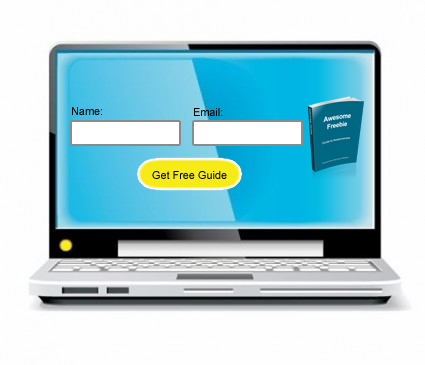
Let’s say you sell a product and you have an email newsletter filled with valuable tips and techniques on using it. As is often the case, your prospective customer is asked for their name and email address. Simple enough, right?

1

They subscribe and get their first couple of newsletters. They’re starting to feel comfortable with your brand and enjoy what they’re getting so far. Here’s where the progressive part comes in. You’ve got another freebie for them – you just need a bit more information about how they plan on using your product, when they plan to purchase, and approximately how much they plan to spend.

Since you don’t need their name and email address again, the form simply asks the relevant questions you’ve set up. This information helps you gradually begin to understand this customer based on how much they’re willing to share as your relationship with them progresses.

2

Obviously you’ll want to space these out and give as much as you get – take the time to answer questions, clarify features and options, and so on. Don’t expect the customer to be receptive to answering personal questions by day 2.

Don’t Forget Your Best Practices

In addition, you’re not going to want to throw best form practices out the window when implementing progressive profiling. Things like:

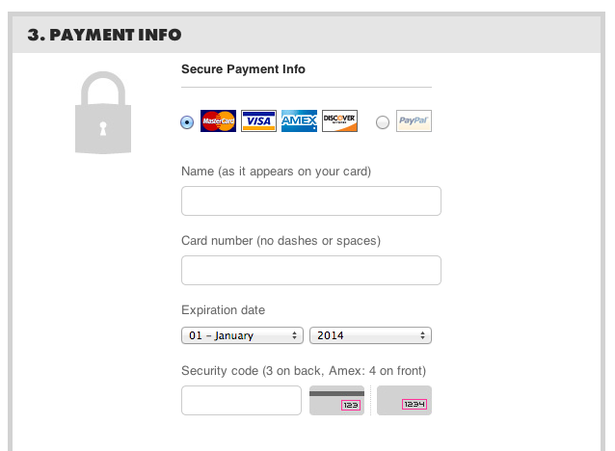
Being Clear about What Information is Needed (And How It Should Be Presented)

credit card threadless

This example from Threadless tells customers precisely how to enter their payment information.

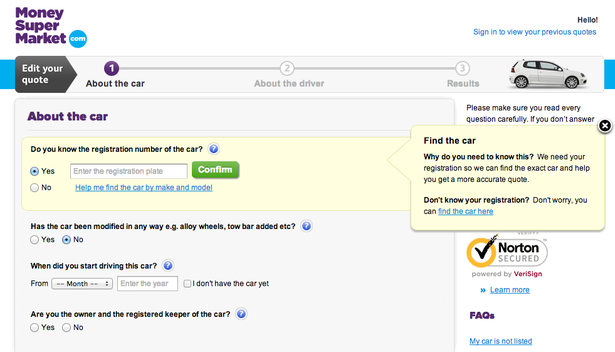
Explaining, if Necessary, Why Certain Information is Needed

The example below, from Money Supermarket tells people why they need the registration number of their car.

money-supermarket

Source: eConsultancy

Make sure your reasoning is reasonable – Money Supermarket could have said, “We need your information to help get you an accurate quote”, but it still wouldn’t answer the prospect’s why? The fact that they need it to find that same exact car and get you a quote is much more sensible.

What Happens After They Subscribe?

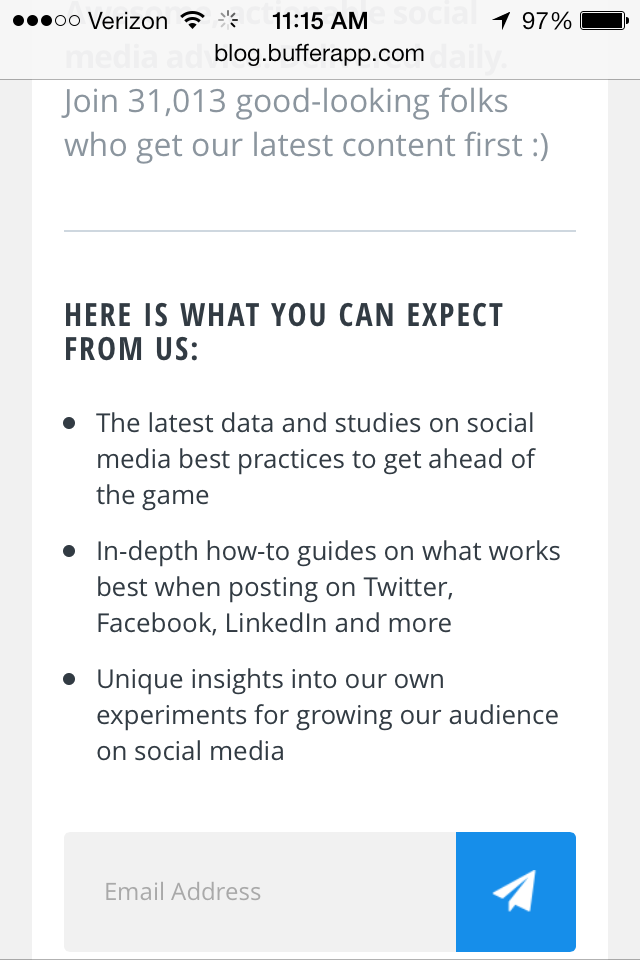
And finally, don’t forget to be clear about what happens after the sign up process is complete. How can they download the freebie? How often will they receive email newsletters? Can they unsubscribe or change the frequency? And so on.

expect-buffer

BufferApp sets newsletter expectations before asking for subscribers’ info

How Can You Implement Progressive Profiling?

Progressive profiling is a relatively new function, but there are a variety of solutions on the market that make integrating it into forms easy and hassle-free. Oftentimes, you can do this without any programming knowledge at all. Here are a few services that offer Progressive Profiling as part of their systems:

Salesforce Pardot

progressive-salesforce

Adds a progressive profiling feature that ties in with your existing use of Salesforce Pardot

HubSpot

progressive-hubspot

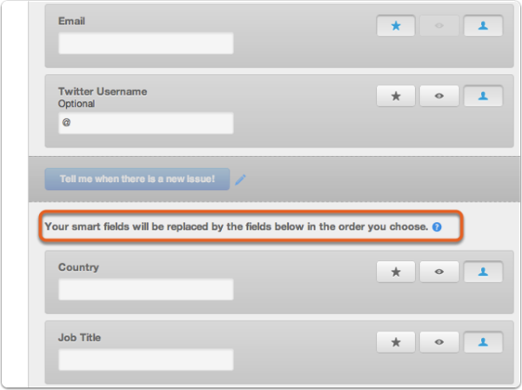
HubSpot refers to progressive profiling form capabilities as “Smart Forms” and provides a variety of best practices you can follow when implementing them.

Act-On

act-on

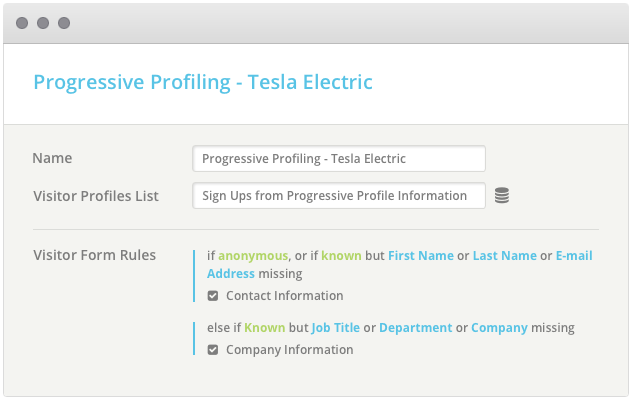
As with other services, Act-On lets you define a set of rules for which other form fields will display. The site also provides an example tour through how its Progressive Profiling system works.

JumpLead

jumplead

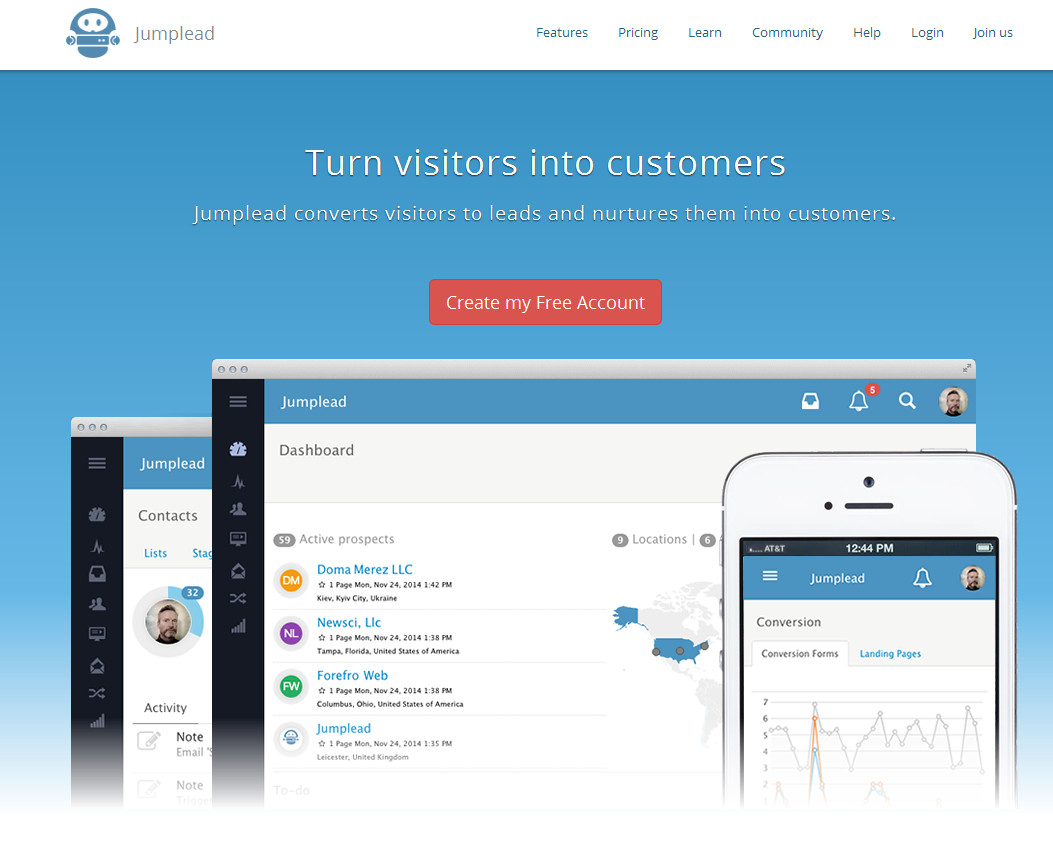
An example of the JumpLead dashboard

JumpLead is a sort of marketing automation/lead generation platform of which progressive profiling forms play a role. Like many of these other solutions, they offer a full scale of marketing automation tools. For WordPress users, JumpLead also has a plugin that can integrate progressive profiling into their existing WordPress system.

How to Get the Best Possible Results from Your New Progressive Forms

It’s easy to fall into the tempting trap of asking for more and more information through more and more form fields as your relationship with the prospect progresses. However, small bits over time (and depending on the customer’s stage in the product’s overall lifecycle, as well as their buying cycle) will help foster a reciprocal relationship while giving them the personal attention and nurturing they crave.

And don’t forget, progressive profiling is just one tool of many designed to help improve your forms and increase your conversion rates. As with any tool, it’s not a silver bullet – it’s all in how you use it. By making progressive profiling a part of your overall sales and conversion optimization process rather than looking at it as “yet another form component”, you’ll be poised to start forming lucrative customer relationships built on a foundation of mutual trust, understanding and expectations.

Now It’s Your Turn

Are you using progressive profiling in your own lead generation forms? How has it worked out for you so far? Share your success stories and triumphs with us, as well as your thoughts on this unique practice in the comments below!

About the Author: Sherice Jacob helps business owners improve website design and increase conversion rates through compelling copywriting, user-friendly design and smart analytics analysis. Learn more at iElectrify.com and download your free web copy tune-up and conversion checklist today!