Thursday, September 29, 2016

5 Cool Ways to Make Marketing Magic with Interactive Content

interactive-content-marketing-magic

interactive-content-marketing-magic

On the occasion of the new trailer for Fantastic Beasts and Where to Find Them, I was thinking about the fantastical wizarding world of Harry Potter. Who wouldn't want to live in a world with magical items like pictures that move, newspapers that automatically update themselves, portraits that speak?

Then it hit me: My smartphone can show moving pictures and auto-updated news, and it doesn't have to be delivered by owl. AND it's a lot more compact than the average Daily Prophet issue. Sure, we can't play proper Quidditch yet-someone get Elon Musk on flying broomstick development-but as far as interactive content goes, Muggles have got it on lock.

The point is, content can do a lot more these days than sit on a screen and look pretty. Are your content marketing efforts taking advantage of that fact? Do you invite your readers to participate in an experience? Or are they left doing this?


There are dozens of ways both subtle and flashy that you can add an extra kick to your content. Here are five to get you started, complete with examples to interact with.

#1: Make Data Extra-Relevant


Say you have a big set of data that relates to 12 different verticals within your target audience. You could make a dozen different infographics. You could write a dozen different blog posts. If you were feeling really sadistic, you could mash all the data into one content source and let each vertical search for the relevant info.

Or you could start with a template, let the user pick which data sources they'd like to see, and watch the most relevant info magically fill in. That's what LinkedIn did, with the help of the wizards at Ceros, for their Where to Find Talent in the United States infographic. Pick your industry at the top, and it fills in the template with customized data.

Interactive Content from LinkedIn

Numbers fly in as you scroll down, delivering exactly the information you were looking for like a Hogwarts owl on a mission. It's a neat way to make sure each viewer finds exactly what they're looking for.

#2: Allow for Automated Hyper-Personalization


Checklists are a go-to content type that content marketers use to add a little extra value. It gives your reader a condensed version of your content, all action items, no filler. Readers tend to enjoy checklists, too-they perform well as a gated asset or as a stand-alone.

But you can improve on the humble checklist by making it interactive. Let your audience pick the most relevant points and compile their own list automatically, as in this interactive infographic from Cross Country Home. SnapApp helped the home maintenance company create the infographic, which allows the reader to choose areas of particular concern, then generate a customized to-do list (after ponying up an email address).

Interactive Content from Cross Country Home

The interactivity makes the checklist far more valuable for the reader, and justifies having the end report gated. It also introduces an element of discovery with clicking on each icon-which might lead to readers spending more time with the content.

#3:  Tell Readers Something about Themselves


Let's face it-we love looking at ourselves, talking about ourselves, taking pictures of ourselves, and learning about ourselves. Don't chalk that up to millennial narcissism either. Some of the earliest photographs we have are self-portraits (not to mention all the old-school self-portraits from painters and sculptors).

You can capitalize on the joy of self-discovery with quiz-based content. From personality quizzes to identifying your Patronus, quizzes are irresistible. Especially so when they're about something that matters, like Influitive's “What's Your Marketing Personality Type?” quiz.

Interactive Content from Influitive

This quiz gets bonus cool points for not making you click to a new page for every question. SnapApp created a single, linear-scrolling experience that removes obstacles for completion.

Take note of how Influitive presents the results: There's your marketing type, a description, and then a brief paragraph on skills your type might need to further develop. Right under that-an eBook offer! What a perfectly logical next step.

#4: Present a Ton of Info in a Visually Compelling Way


This next example takes what could have been a blog post or a slideshow, and makes it something that's a lot more fun to play around with. Even if the information is familiar, or common knowledge, a novel presentation can make it worth a second look.

Designhill created this interactive guide to famous company logos. It presents itself as a seemingly infinite grid, with logos lined up in rows just waiting to be clicked so they can reveal their secrets.

Interactive Content from Designhill

As you scroll and explore, you'll notice some of the tiles are calls to action: Create a Logo, Get a New Graphic Design, etc. These CTAs are inobtrusive but designed to be spotted after you've had fun playing with the content. And if you happen to miss them, there's a CTA in each of the info pages that pop up when you click a tile.

#5: Bring Together Disparate Elements


No one's product exists in a vacuum. Unless you sell vacuum bags, and even if you do, that's not what I meant and you know it. Your target consumer has an entire life outside of their relationship with your product-and many aspects of that life also involve interaction with other products. Interactive content can help you address the larger context of your audience's lives.

This fantastic Summer of '66 widget from Asos is a prime example of that kind of synergy-not the bad, buzzword-y kind, but a genuine combination of separate elements to make something groovier than the sum of its parts. Pick your 60's style, and get music recommendations you can buy on Amazon or iTunes, clothes from Asos, and a Spotify playlist to stream immediately.

Interactive Content from Asos

It's a triumph of great design, effortless cool, and actual utility, inviting readers to customize an entire experience, not just a look or a sound. I'm just sad the sweepstakes to win that turntable is over.

Expecto Engagement!


In this age of wonders, we don't have to stick to old Muggle methods of content marketing. Text will always have its place, of course. There's no substitute for good old-fashioned long-form content. But your audience will appreciate it if you conjure up interactive experiences that enhance your quality content.

What else can interactive content do? What has your team created that dazzled your audience? Let me know in the comments.

Disclosure: LinkedIn Marketing is a TopRank Marketing client. 

The post 5 Cool Ways to Make Marketing Magic with Interactive Content appeared first on Online Marketing Blog - TopRank®.



Two Ways User-Generated Content Can Keep Your Brand Relevant

Two Ways User-Generated Content Can Keep Your Brand Relevant written by Guest Post read more at Duct Tape Marketing


Two Ways User-Generated Content Can Keep Your Brand Relevant - Duct Tape MarketingIn today's digital age of marketing, brands are focusing on User-Generated Content (UGC) campaigns to improve their web performance and increase organic responses. User-Generated Content refers to any form of online content such as a Tweet, Snap, Facebook status, Instagram post, or blog that contain authentic opinions about a service or product as experienced by a non-professional.


Fairly, their choice of marketing strategy is justifiable with all these successful user-generated content campaigns trending in various social media platforms. Whether you're a startup business building an audience or an existing brand struggling to establish a solid base of loyal customers, developing a marketing strategy that heavily emphasizes user-generated content will benefit your product one way or another.


Understanding UGC: Its Essence and Its CapabilitiesTwo Ways User-Generated Content Can Keep Your Brand Relevant - Duct Tape Marketing


Before exploring the internet labyrinth and its mysteries, the first thing you should do as an adaptive marketer is to fully comprehend the value of user-generated content at its very core. If you need any presentation assistance for your brand, there are two things you should consider: a well-planned social marketing strategy backed by a structured social content approach, and a broad knowledge of internet copyrights.


You need to know that user-generated content can build or destroy your brand's reputation. A recent study shows that user-generated content is in demand – being produced and recommended to social circles at a rapidly increasing rate, especially among the younger generation.  As the reach of online platforms has expanded throughout Web 2.0, consumers have been given the freedom to express themselves in a span of seconds. People can post good and bad things about your brand, the quality of your service, and the performance of your product in a short amount of time. However, the most crucial part for any post apart from its authenticity is if the customer will end it with a call to action that recommends you.


Here are two ways user-generated content can keep your brand relevant:


  1. It does brand awareness campaigns for you.


Two Ways User-Generated Content Can Keep Your Brand Relevant - Duct Tape MarketingUser-generated content is pervasively dominating social media as if it were an epidemic outbreak, which is good. The Nielsen Company conducted a worldwide survey and found that consumers trust word of mouth marketing the most; 90 percent of survey-takers believe recommendations from people they know while 70% put faith in reviews posted by strangers online. Even millennials are said to be obsessed with user-generated content.

All these statistics have one common ground: authentic feedback. Buyers are more likely to get hooked on a brand due to real and trustworthy experiences provided by other users.


A good example is Starbucks' successful design-a-cup campaign in 2014. The campaign encouraged U.S. and Canada-based customers to design their own Starbucks cup, take a photo of it, and post it online with the hashtag #WhiteCupContest. The winner receives the privilege of having his masterpiece as the official design of Starbucks's limited edition reusable cup. In four weeks, the campaign received 4,000 entries. Yes, it wasn't a 5-digit figure but think about it – with each entry, dozens of friends and family members rooted for their participant and constantly shared it through online posts.


Another example would be Marc Jacobs' #CastMeMarc stunt in which participants posted their best modelling photos/selfies on Twitter and Instagram under said hashtag. Winners were scouted by the company for its  2014 advertising campaign. Within a day, Marc Jacobs received more than 15,000 submissions. Again, each entry had its corresponding supporters based on the participant's number of followers; each post was linked with a number of likes generated  by the connections of the aspiring winner.


  1. Even negative reviews increase your customer database.


Focusing the spotlight on customer reviews makes your brand more authentic. To make your brand more credible in the eyes of your customers, highlight people's feedback. Old-fashioned Two Ways User-Generated Content Can Keep Your Brand Relevant - Duct Tape Marketingmarketing strategies would opt to advertise positive responses. However, people would want to see the other side of the coin:  negative reviews. There is no perfect product so it's impossible to evade negative labels from buyers. After all, there is no “one size fits all” brand. Given this reality, it would be better if you admit the flaws of your product or service and make up for it.


Addressing negative feedback does more than elevating your ratings; it makes your customers feel that you are genuine as a seller and that you value customer service. SDI states that 30 percent of customers will return to a brand to see if there were any improvements made regarding their negative feedback.


According to The Retailer Consumer Report, 68 percent of consumers who posted a negative review on a social networking site (after an unpleasant holiday shopping experience) got a response from their corresponding retailers. Unexpectedly, 18 percent of these buyers were converted into loyal customers and bought more than they previously purchased.


User-generated content is a huge game changer in the field of marketing and advertising as it is the driving force that channels the attention of buyers and potential customers to your business. Therefore, it is important to create campaigns that does not only engage people, but also encourages them to spread the word about your brand.


REFERENCES:


Alter, Joanna. “3 Ways to Grow Your Business with User-Generated Content.” Marketo. June 3, 2016. www.blog.marketo.com/2016/06/3-ways-to-grow-your-business-with-user-generated-content.html


Duggan, Leeann. “Marc Jacobs Casts New Ad On Twitter, Selfie Storm Ensues.” Refinery 29. April 4, 2014. www.refinery29.com/marc-jacobs-instagram-casting


Foong, Louis. “Millennials Love User-Generated Content [Infographic].” Business 2 Community. March 29, 2016. www.business2community.com/infographics/millennials-love-user-generated-content-infographic-01497502


Loechner, Jack. “Retailer Follow Up On Negative Reviews Pays Off.” Research Brief. March 16, 2011. www.mediapost.com/publications/article/146630


MacKinnon, Katherine A. “User Generated content vs. Advertising: Do Consumers Trust the Word of Others Over Advertisers?.” 2012.


www.elon.edu/docs/e-web/academics/communications/research/vol3no1/02mackinnonejspring12.pdf


MacLeod, Sumari. “Why You Should Launch A User-Generated Content Campaign.” Hootsuite. December 16, 2015. www.blog.hootsuite.com/launch-a-user-generated-content-campaign


Pemberton, Chris. “Fuel Social Marketing with User Generated Content.” Gartner. June 10, 2016.


www.gartner.com/smarterwithgartner/fuel-social-marketing-user-generated-content


“Global Advertising Consumers Trust Real Friends and Virtual Strangers The Most.” Nielsen. July 7, 2009. www.nielsen.com/us/en/insights/news/2009/global-advertising-consumers-trust-real-friends-and-virtual-strangers-the-most.html


“Meet the #CastMeMarc Winners.” Marc Jacobs. July 3, 2014. www.youtube.com/watch?v=ywg-_kHbJyo


“Starbucks Invites You to Decorate its Iconic White Cup.” Starbucks. April 22, 2014. www.news.starbucks.com/news/starbucks-invites-you-to-decorate-its-iconic-white-cup


Rick EnricoRick Enrico is the CEO and Founder of SlideGenius, a global presentation design agency. He regularly publishes expert presentation tips on the SlideGenius Blog. He currently oversees an experienced team of designers, software developers, and marketing professionals that specialize in creating custom corporate presentations and cloud publishing applications. Connect with him on LinkedIn and Twitter.


PullString unveils all-purpose intelligent conversation platform

Staffed by ex-Pixar employees, the company describes the new release as the most complete expressive toolkit for text- and media-based characters.


Please visit Marketing Land for the full article.


Keep Your Customers Coming Back in Times of Content Overload

Randy Frisch and I had the chance to connect with some of the best professionals in content marketing, and we kept you in mind every step of the way. Joining us is simple. Choose a Content Pros podcast and press play.


Don't miss out on the chance to hear Justin Levy, Mike Stiles, Allen Gannett, David B. Thomas, and Jay Baer share their content marketing expertise.


Getting the Most Out of Free Real Estate

Wikipedia is regularly a top Google result for brands and many customers will check out a company's page before visiting the brand's very own website. In spite of this, rarely is there a team assigned to overseeing and working with the content for this vital first impression.


As Director of Social Marketing at Citrix, Justin Levy has succeeded in not only working with Wikipedia on ensuring an accurate and informational page, but also in balancing the need to push out content without overwhelming the audience (both internal and external). His strategy for crafting, publishing, and overseeing content has led to an online presence that is engaging, informational, and successful.


Here are a few highlights from our conversation with Justin:


  • How an open publishing system for internal content leads to a decrease in employee advocacy and engagement

  • The dangers and advantages of tagging

  • How incorporating Wikipedia management into marketing leads to a deep SEO strategy


Together But Separate

Multiple brands competing for attention in a crowded, noisy, online marketplace can overwhelm and exhaust even the most seasoned professional. For Mike Stiles, Global Content Strategy Manager for InterContinental Hotels Group (IHG), navigating the waters of multiple brands means taking a step back. Instead of being hands on and controlling each brand's message, he takes a more consultant-like route, letting the brands carve their own path.


By trusting each brand to know their own audience, Mike empowers his team to create more relevant and impactful content, and that success reflects positively on the company as a whole.


On this podcast, Mike shares great insights about:


  • How juggling multiple brands can lead to content chaos

  • Why empowering your enterprise means stepping back and acting more as a consultant than a manager

  • How your brands can lead your content to success


Less is More

The question on everyone's mind is why is content marketing booming, yet falling flat and ultimately hurting businesses?


As Allen Gannett, CEO of TrackMaven, sees it, posting content on every channel all day long can be pointless and harmful without a strong strategy. If your customer finds your articles irrelevant, they aren't likely to click. And even worse, in their mind, the association of being irrelevant will extend to your brand as well.


The strength in content lies in responding to demand, educating the audience, and focusing your efforts on the channels where your customers work and play.


It's not too late to hear from Allen about:


  • Why the explosion in content quantity does not mean a similar increase in engagement

  • How relevance leads to content that is powerful and impactful

  • Why focusing on essential channels means being ok with a smaller quantity of content that has bigger impact


Data Mining for Content

With 20 years of B2B marketing experience (the past 8 of those years focused on content and social) David B. Thomas, Senior Director of Inbound Marketing at Leadspace, understands how to balance creativity with data. His thorough approach to pairing compelling content with vetted data led a unified content and social media marketing team at Salesforce that generated 15% of all valid leads in North America in 2014, and more than $150MM in pipeline.


Combining Dave's expertise in content and skill with data ensures that every piece has the best possible audience to make the largest impact on your business.


Here are 3 insights to gain by listening to Dave's episode now:


  • Why effective content marketing means taking the information you already have and customizing it for your audience

  • How careless and shallow personalization leads to a decrease in content efficiency

  • How up-to-date customer data leads to more accurate content


Keep Customers Coming Back For More (Content)

We all know the power of content to acquire new customers. But what about keeping the ones we already have?


As customer service moves to the very public realm of social media, Jay Baer, President of Convince & Convert, knows there is a huge opportunity for businesses to both acquire and retain customers by showing you care for them publicly and privately. Embracing public feedback, both good and bad, allows you to create motivating content that caters to both new and existing customers.


Click here for more on Jay's proven approach:


  • Why thinking through to customer retention means creating content that embraces feedback

  • How creating content solely for customer acquisition leads to a decrease in revenue

  • Why the public forum of social media griping means a huge opportunity for businesses


This monthly round-up of the weekly Content Pros podcast shares some takeaways from recent episodes. If you like what you've read (and heard), please subscribe to show on iTunes or wherever fine podcasts are downloaded.


Wednesday, September 28, 2016

20 Fascinating Topics That Every New Blog Should Tackle

When you know your stuff, writing a blog is easy, right?


Uh. Not necessarily.


I'd say that I'm pretty familiar with digital marketing. But when it comes to blogging, I still face challenges.


The challenge isn't my lack of knowledge; it's translating that knowledge into readable content-content helpful to you and other marketers.


Maybe you've faced the same challenge.


For some reason, conveying stuff you know inside and out is a lot trickier than it appears. Writing is difficult enough, but continually coming up with topics that would boost your online marketing efforts seems downright impossible.


In the old days, maintaining a business blog was more about appeasing search engine algorithms than appealing to actual humans. Back then, cramming posts full of keywords was the top priority.


Today, for a business blog to produce results, it has to appeal to humans first and search engines second. In fact, SEO and UX are basically one and the same.


image02


Gone are the days of blathering on ad nauseam about anything your heart desires.


Content marketing via blogging is one of the best ways to increase the online visibility of a brand. These days, though, the posts you create must be engaging, informative, interesting, and generally high in quality to get you anywhere.


Contrary to what you may have heard, quantity does not exceed quality here. Even so, coming up with fascinating topics for a blog is often difficult for business owners. Here are 20 topics and ideas to get you off to a great start.


1. Write a long-form post


In the business world, getting straight to the point is generally the way to go. Quick, snappy blog posts have a time and a place, but your blog will suffer if that's all you ever do.


Regardless of your niche, there are surely topics you could cover that require more than 400-500 words. Brainstorm topics that demand extensive, in-depth coverage, and then create long-form blog posts about them. The exhaustive nature of such posts will make them fascinating to anyone who is thirsty about the topic.


You may be aware that long-form blog posts-over 2,000-3,000 words-will rank higher, get more shares, and earn more links.


image03


This is the kind of traction you need to gain with your blog.


2. Be a reporter


Even if journalism was never your forte, pretend otherwise by reporting back to your audience about important events in your industry. Ideally, these should be events you have attended yourself.


There are, of course, differences between journalistic writing and blog writing. However, in today's content-driven world, there is also a lot of overlap.


image01


For example, write a blog about your experience at a recent trade show. At the event, take notes about the things you see and the people with whom you interact. Take photos, and include them in your post. Include your own insights to make the piece more personal.


3. Comment about a popular post


Part of maintaining an interesting blog is staying in the loop about happenings in your niche and industry. You should already be keeping up with blogs in that sphere. When a particularly interesting one pops up, write a post about it.


Doing this accomplishes a few things. First, it lets you engage with the community while delivering your take on the original post. Second, it gives you the opportunity to link back to the original post, which might result in a link in return. You'll gain exposure and, potentially, some backlinks!


4. Share your secrets


No, I'm not telling you to give away all your secrets. Rather, connect more deeply with your audience by giving them information about your business practices and processes “from the horse's mouth.”


It's all about transparency and authenticity, and it resonates strongly with readers. People enjoy feeling like they are privy to special knowledge.


I do this as often as possible, e.g., by updating my audience on the $100,000 challenge, showing all the relevant data, metrics, and revenue numbers, and sharing the lessons I'm learning from my experiment.


image00


Maybe it's time to pull back the curtain, and share your secrets in a blog post.


5. Round up industry experts


Establish relationships with key players within your industry through persistent social media activity. Once they've gotten to know you, invite thought leaders in your niche to share their views regarding a specific topic.


Compile all their contributions-with their permission, of course-and create a roundup blog post with them. Include links to each person's blog because they might return the favor.


6. Make an infographic


You probably have plenty of facts and statistics about your niche and industry at your disposal. Put relevant ones together, and use them to create an eye-catching infographic to share on your blog.


If necessary, hire someone to create it for you. Include it in a new blog post, and then provide commentary about the facts and statistics within the body of the post. Encourage sharing by providing an easy link for people to use.


7. Look at both sides of an issue


Posts covering the pros and cons of a particular issue, product, or service tend to be received very well, and they are usually a breeze to put together. Brainstorm and write down issues that tend to have significant advantages and disadvantages.


During the course of researching this kind of piece, you will become even more knowledgeable about your niche. In the post itself, speak directly to your audience. Ask them for their take on the issue. Through their contributions, you can develop even more fascinating fodder for your blog.


8. Go behind the scenes


Blog posts about your actual business should be kept to a minimum as they tend to be pretty yawn-worthy. From time to time, though, go ahead and give readers a glimpse of what makes your company tick.


Reserve these posts for behind-the-scenes topics your audience will actually care about. For example, share what your company does to prepare for a big trade show, or introduce a new employee who you suspect will be a real game-changer for the company.


9. Explain how to do something


How-to articles and blogs tend to do well because people overwhelmingly turn to the Internet for advice and instructions on accomplishing various things. If you can incorporate one of your products into a how-to post, all the better.


For example, perhaps there's a special way to use one of your products few people know about, or maybe there's a process people should follow to make the most of it.


Be as thorough as possible in your post. Explain it as meticulously as you can. Include videos and photos to drive home your point and to ensure people bookmark and share your article.


10. Interview people


Yep, I'm asking you to be a journalist again. Remember those thought leaders and industry experts from a previous tip? Interview one of them to create a full-fledged blog post about your niche or industry.


Thankfully, you don't have to be in the same room as your interviewee to talk to them. Come up with a list of questions your audience would be curious about, and email it instead. You could also post the questions via Twitter or another social media channel.


11. Make an FAQ post


Since you're already actively engaged with your niche and industry on social media-you are, right?-you can easily keep your finger on the pulse of what people are saying. More importantly, you can quickly figure out what they are asking.


Scour social media for questions from everyday people regarding your niche. Compile a frequently asked questions post to address them. You might even include links to questions on sites like Twitter and Facebook to gain a little link juice too.


12. Give readers the hard truth


I don't care what niche or industry you cover. There are sure to be at least a few elephants in the room or subjects that people are generally afraid to broach. As long as you have something useful to say, go ahead and have at it.


Controversial posts shouldn't be the bread and butter of your blog, but they can certainly stir up interest under the right circumstances. Tell it like it is in your blog from time to time to really wow your audience.


13. Share a case study


Blogs that explain how everyday people make use of a company's products or service can be pretty engaging. However, resist the temptation to make something up. Wait until you have something truly special to share, and then share it.


Ideally, you should get permission from the client or customer to feature them, and include their input in the case study too. While the piece will obviously be promotional to some extent, write it in a factual, journalistic way to avoid alienating your audience.


14. Start a series or a regular feature


Some topics are so extensive that they can't be covered adequately in a single post-not even a long-form one. When you run across one of these, consider breaking it up into a series for your readers. Create cliffhangers at the end of each one to keep them coming back for more.


You could also come up with a weekly or monthly feature for your blog. For example, you could highlight happenings regarding your niche in social media every Monday, or you could feature a new product or service every month.


15. Make a really long listicle


By now, we're all familiar with the standard listicle, which typically contains 5-10 related points. This has been done so much that people don't get very excited about it anymore.


Improve on the concept by coming up with a really long listicle that pertains to your niche. But do so only if the topic at hand is deep enough to warrant it, or you will end up with a bunch of similar-sounding points.


16. Stir controversy


Think of some common views or beliefs regarding your niche. You are sure to disagree with at least a few of them, so write posts expressing your viewpoints, challenging the accepted opinions.


Doing this will likely invite controversy, so be sure to write these posts in a tactful way. Don't attack others. Instead, explain why you think the status quo has it all wrong, and challenge readers to convince you otherwise.


17. Debunk some myths


What are some common misconceptions or myths regarding your industry or niche? Compile a list, and then use it to create a really fascinating post for your audience.


Make sure you back up your claims, though. Otherwise, readers will lose their interest when they realize they're reading the rants of someone who really doesn't know what they're talking about. Approach writing such an article with the intention of providing as much useful and usable information as possible.


18. Share customer success stories


With any luck, satisfied customers will occasionally contact you to express their appreciation. When this happens, ask them if you can feature their comments in a blog post for your business.


In this type of post, begin by describing the problem the customer was facing. Describe the product or service they used, and then explain how they were able to solve their issue by using it. If possible, include additional comments from the actual client to make the post especially engaging.


19. Perform research to delve deeper


At a certain point, you will exhaust the resources regarding facts and statistics concerning your niche. Avoid becoming repetitive, and conduct your own research.


This could mean something as simple as posting an online survey for your existing readers and sharing the results. However, you might even want to hire a market research firm for assistance. If you can present brand-new facts and information to the world, your blog will be better, and you will have a lot more to go on.


In your post, include visual representations of data to help people make sense of it. A simple pie chart or bar graph can make a huge difference.


20. Share a link roundup


As you run across interesting posts, memes, and other content regarding your niche, save them. After accumulating 10 or 20, write a link-roundup post featuring each one.


This is great for a few reasons. First, it forces you to stay up-to-date on your industry news and helps you bring relevant information to your audience. Second, it lets you branch out and opine about all kinds of content. Finally, it may even enhance your link-building strategy, which never hurts.


Conclusion


In a perfect world, none of us would ever have to cope with writer's block.


The ideas would flow freely and continuously. Since that's not the case, use this list of topics and ideas to kick-start your new blog.


When readers visit your new blog and are presented with an array of fascinating posts, they're likelier to engage with it, bookmark it, and keep coming back for more.


And that's exactly what you want to happen.


Have you already covered one of the ideas listed above? Which new ones are you excited to try?


How to Add Real-Time Communication to Your Existing Marketing Stack

Let's think back to the early days of social media for a moment, and how it impacted our marketing.


Not only did it bring the potential of massive free exposure, it radically increased transparency as well. Every good or bad customer experience suddenly became a potentially viral story. And thus the relation between business and consumer was changed, forever.


But social media isn't at the top of the digital food chain anymore. As of 2015, messaging apps have overtaken social networking apps in monthly active users.


messaging-apps-surpassed-social
In 2015, messaging apps overtook social media platforms in monthly active users. (Image Source)


This balance tip coincided with a few other developments: Facebook's launch of Messenger for Business, WhatsApp announcing a move into B2C communication, an increasing reliance by businesses on message-based communication tools like Slack, and advancements in artificial intelligence (AI) entering a critical phase. The last point was nicely illustrated by AlphaGo wiping the floor with our human champions in Go.


Chris Messina, the guy who brought us the #hashtag, noticed the interplay between these developments, and concluded in a post on Medium that we're at the brink of another revolution in B2C relationships.


Where before you would use your messaging apps for simple interactions with friends, the above developments allow them to be used for real-time conversations with businesses as well – whether that's with a service rep or an intelligent chatbot. He dubbed this new era of B2C relationships 'conversational commerce'.


So, how can you take advantage of this development? How can you integrate real-time communication into your existing marketing stack?


First, let's clarify why you'll want to jump aboard this trend in the first place. Then we'll share some ideas and company examples that will help you start off today.


The Promise of Real-Time Communication


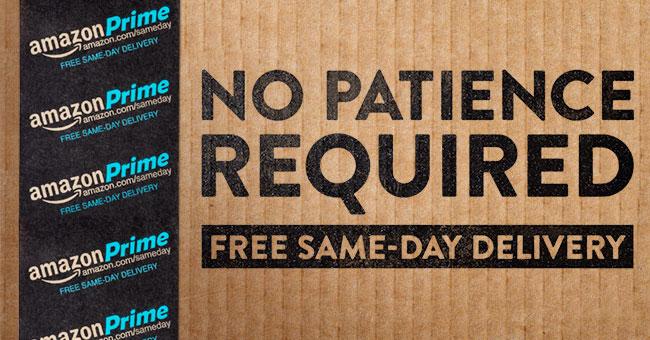
For years, marketers have known the power of 'now'. Pay attention to the banners and billboards you'll run into throughout the rest of the day, and notice how often they're filled with maxims like 'instant access', 'same day delivery', and 'quick checkout'. Immediacy strongly impacts our buying behavior.


amazon-prime-no-patience-required-ad
Amazon Prime, a prime example of our desire for immediacy. (Image Source)


In The Art of Thinking Clearly, Rolf Dobelli shares an experiment into our weakness for 'right now' with two groups of participants.


Group A was asked whether they would rather receive $1,000 in 12 months, or $1,100 in 13 months. Most chose the 13-month option, because where else will you find an investment option with a 10% monthly interest rate?


Group B was offered a slightly different choice. They could choose to receive $1,000 today, or $1,100 in one month. Here, most people choose the $1,000 today option. This is remarkable. The choice is basically the same – except that the $1,000 today targets our weakness for wanting things right now. That's hyperbolic discounting, our irrational preference for what we can get now over what we can get in the future.


Real-time customer service has a similar effect on our preference for right now. According to a Forrester Research study, 57% of online customers leave a website if they don't receive a quick answer on their question.


This was confirmed in a case study with Intuit, the company behind the financial products QuickBooks and Mint. By placing live chat for real-time support during its checkout process, Intuit increased its average order value by 43%.


From “Interaction” to “Relation”


A major benefit of communication via messaging apps is that it results in a permanent and low-barrier connection with the customer.


Once a phone call with a customer is over, the connection is broken. That is not the case with email, but email has a high barrier to contact compared to writing a message on Facebook.


A permanent low barrier connection promises a major increase in customer interaction – keeping your business top of mind and always accessible.


Also, when a conversation picks up again, it happens within the context of a messaging thread. This makes it easier for support reps to understand the situation and provide a good answer. While emails and phone calls are mere snapshots, messaging threads represent long-term relationships.


Lower Costs per Interaction


As mentioned above, the existing messaging thread will prevent duplication. Things become more efficient when customers don't have to repeat their issue with every service handover – not to mention more pleasant.


At the same time, advancements in natural language processing fuel expectations of chatbots soon solving many support questions that humans are tackling at the moment. Not all, of course. But a modest 20% would already represent a huge gain in efficiency.


We're still some years away from scenes like in the movie Her, in which we're having natural conversations with smooth sounding chatbots that are indistinguishable from those with humans. What is closer and easier to picture, however, is a sort of 'chat cyborg' – a human service rep that uses AI to deliver a superior service.


When a question comes in, AI runs it through the database of customer interactions and offers answer suggestions to its human colleague. The human serves as the last check, and can choose to override the suggestions or adjust them. The AI learns from the answer that is given, as well as the response from the customer (was it the right response?). That way, the chat cyborg is continuously growing in smarts and efficiency.


Now let's look at how you can start with reaping the fruits of these developments today.


How to Get Started With Real-Time Communication


Live Chat on your Site


Web chat has been around for some years, but is developing fast together with the abovementioned trends. You implement a live chat window on your website, through which visitors can reach out and receive support.


Live chat offers many of the benefits described above, such as the power of instant support and minimizing duplication. What makes it especially powerful is that the chat is available at a critical moment in the buyer's journey – on the website.


A customer might be ready to buy, but has some small concerns or questions before doing so. With live chat there's no need to delay the purchase, since questions can be resolved on the spot.


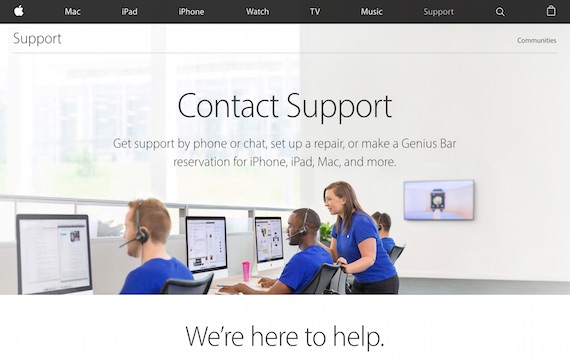
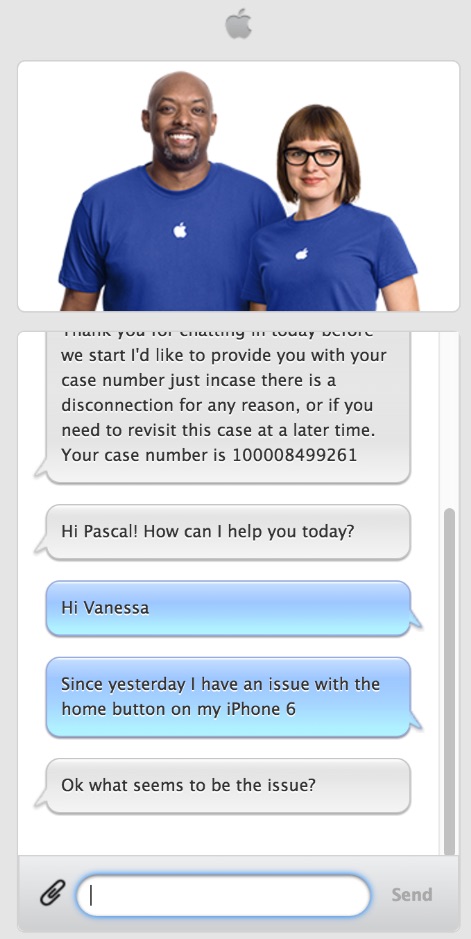
A great example of how to do chat right is Apple's live chat service.


apple-support
Live chat is an important ingredient in Apple's service setup.


If you're an Apple user, I recommend you try it out next time you have a service question. You receive full and detailed answers in no time, which suggest they make use of an intelligent knowledge base in the backend.


apple-live-chat-suppport


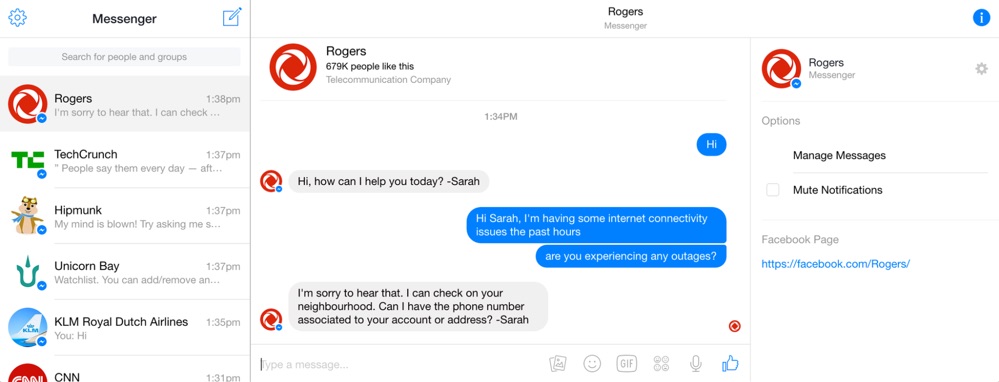
Facebook's Messenger for Business allows live chat providers to connect to their platform, and tools like Telegram and WeChat are open for this as well. We can expect tighter integrations between website chat and messaging support in the future.


facebook-messenger-for-business
Rogers connected its support team with Facebook to help customers via their favorite channel.


Messaging support


Messaging support is very promising, simply because it's so darn convenient for consumers. They send a question through their favorite messaging app, and receive an answer in their back pockets.


For this to work, you need to hook up your support team to your messaging channels – be it Facebook, WhatsApp, WeChat, Telegram, or a combination – and let your customers reach out to you.


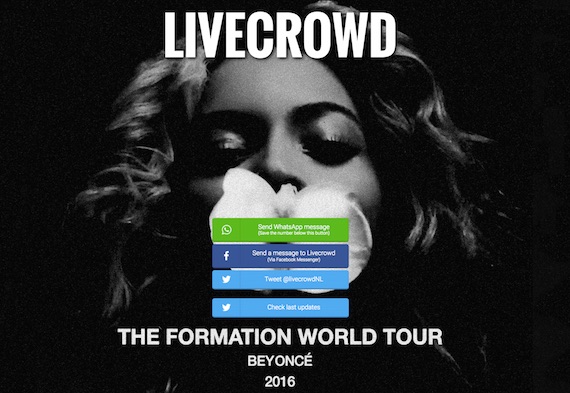
One example of a business deploying large scale messaging support is Livecrowd, a Dutch company offering next-level customer service and experience for mass crowd events. Think festivals, football matches, or concerts (see Beyoncé's concert page below). Such events are major logistical challenges. A quick and easy way to advise visitors about transport or safety is invaluable.


livecrowd-beyonce-world-tour-page
Messaging support is perfect for customers on the go, such as music event visitors.


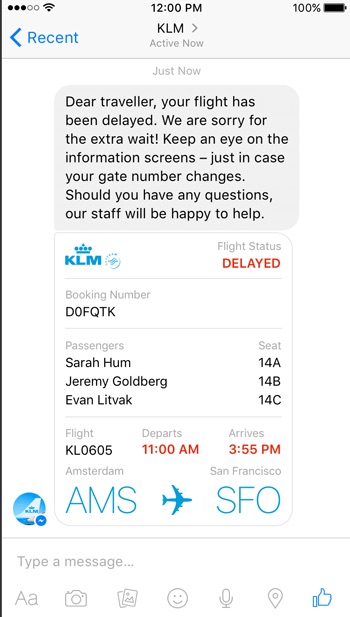
Another messaging example from the Netherlands is KLM, Royal Dutch Airlines. Since a few weeks, they've added Facebook Messenger support to their booking process.


This makes it easy for flyers to check the status on their flights and ask support agents any questions:


klm-messenger-support
Managing your booking with an app you're already familiar with.


When you're booking a flight and are logged into your Facebook account, you can select to stay updated about your flight through messenger. When you have a delay, for example, you receive an update on the app. You can also receive your boarding pass through Messenger, or ask questions to the KLM service team directly.


As you can see, part of KLM's messaging support is automated. Which brings us to the next application.


Chatbots


Chatbots are a hot and exciting area of the tech industry, mainly because they're fueled by advancements in machine learning.


Slack allows you to connect an existing chatbot to your team or build one with its own logic, while Facebook's Chatbot API allows you to build a bot for Messenger. There are also plenty of third party apps that allow you to set up a chatbot fairly easily, such as Motion AI.


One example of the extensive use of chatbots is Call of Duty. Players can connect with Lieutenant Reyes chatbot, and solve a not-so-easy-to-solve puzzle. This chatbot sent over six million messages to its gamers in total.


Chatbots will only become more interesting with the continuous advancements in machine learning. The more intelligent the chatbots become, the more customer interactions can be left to them.


How to Get Started


Make a comprehensive communication plan.

To get started with real-time communication, you'll need to integrate it in a comprehensive communication plan. Ask yourself: What channels make sense for me and my customers?


Set up a dedicated service team.

The fact that conversational commerce is based on text means that compared to phone, more interactions could be done per service agent. But you'll also have a lower barrier for contact, so you can expect the number of customer interaction to rise. You'll need a dedicated real-time communication team to support this.


Empower frontline employees.

In real-time communication, speed is king. Zendesk stated that customer satisfaction in live chat dropped after 30 seconds of waiting. Since you'll be having so many customer inquiries requiring fast responses, it's essential to empower your frontline employees to resolve issues themselves. The number of cases that require involvement from higher up should be minimized.


Set up communication guidelines.

That doesn't mean your real-time communication should be a free-for-all. On the contrary, it takes directed effort to maintain a consistent voice across all channels. Like The Economist maintains a style guide for its articles, you should require a style guide for your real-time communication as well. On what level of familiarity will you communicate? If you'll speak in English, will it be British or American?


Play together with your other channels.

In the world of conversational commerce, one-on-one conversations will cover a much wider area of topics than before. That's why your frontend employees need to be well aware of all external communications. Whether it's social media, content, email, or performance marketing – your real-time communication channel needs to be in sync.


Track key metrics.

One key benefit of written communication is that it can easily be tracked. Most live chat solutions, for example, have standard integrations with analytics solutions like Google Analytics and Kissmetrics. With them, it's easy to measure key indicators of quality communication: first response time, handovers per issue, service ratings, etc.


Conclusion


We really do seem to be at the brink of another revolution in the relationship between businesses and customers.


You can start reaping the benefits of real-time communication today, by taking the first steps with website chat, messaging support, and chatbots. Happy chatting!


About the Author: Pascal van Opzeeland is CMO of Userlike, software for website and messaging support. He and his team share tips about customer communication on the Userlike Blog.