Please visit Marketing Land for the full article.
Wednesday, July 27, 2016
Why “ad load” questions overtook Facebook's latest earnings call
One of the main factors driving up Facebook's ad revenue, ad load will become a less significant one by mid-2017, said Facebook CFO David Wehner.
Please visit Marketing Land for the full article.


Please visit Marketing Land for the full article.

Podcasting Best Practices
Podcasting Best Practices written by John Jantsch read more at Duct Tape Marketing

Marketing Podcast with Jessica Rhodes
I love podcasting, but not for the same reason so many other people are hyping it right now. Yes, you can build a business and make a bunch of money podcasting – just like you could five years ago with blogging. But the reason I love it and promote it for every small business is because it's an awesome way to create content and a sneaky way to build authority and make connections.
It's not really that sneaky, but for years I've used podcasting to connect with interesting people, leaders, and people that could enhance my brand.
Now, you can connect with thought leaders, but you can also connect with potential clients. Let's say you target CEOs of mid-sized firms. Why not start a show that focuses on the challenges and success of CEOs of mid-sized firms. Awesome content, expert status for you, and maybe, just maybe you get access to a prospect that would never pay attention to your sales ovations.
My guest for this week's episode of the Duct Tape Marketing Podcast is Jessica Rhodes, CEO and Founder of Interview Connections, a source for booking podcast guests. Jessica and I talk about what it takes to give a good interview on both ends of the spectrum – as the interviewer, as well as the person being interviewed.
Jessica knows the podcast industry. She is the host of the web TV show, Interview Connections TV, the Rhodes to Success podcast and she's a co-host of The Podcast Producers, selected by Apple as a “How to Podcast” show in iTunes.
Questions I ask Jessica Rhodes:
- As an interviewer, what's your advice on where to find great guests?
- When you're a guest on a show, what are 5 things you could do that will never get you booked again?
- Can you make money in being a podcast guest?
What you'll learn if you give a listen:
- How interviewing your target market, versus major influencers or celebrities, can lead to greater opportunities
- Why it's important to have clear content on your website if you want to be pitched
- What the “right” way to interview is and the questions/mannerisms you should avoid
Learn more about Jessica Rhodes and Interview Connections by clicking here.
Tumblr is releasing ads across blogs & giving users a cut
Ads will be making their way across Tumblr blogs, and user will be getting a piece of the action (if they allow the ads to run).
Please visit Marketing Land for the full article.

Please visit Marketing Land for the full article.
For B2B Brands and Their Agencies, It's Time To Get Down To Business
So many things in the world are changing, literally as we speak. So why wouldn't the relationship between brands and their agencies change, too?
According to a study conducted by Forbes Insights and sponsored by Oracle Marketing Cloud, 60% of brand/agency executives say their roles and responsibilities have changed significantly over the past two years while another 48% of marketing executives say evolving brand and agency roles are making successful collaboration more difficult.
Mark Roberts, CMO of ShoreTel, says the shift in roles is noticeable. “Agency relationships have evolved dramatically over the last few years, primarily as they have explored how to become more strategic in the relationship and as marketing groups have struggled to keep up with the pace of change in technology.”
This Is Changing Everything
Data and analytics have changed the face of B2B marketing and the relationship between brands and agencies. But make no mistake about it. At the heart of these efforts is a drive to effectively gather and mine rich sources of customer data.
In fact, when asked to identify which area will see the greatest impact from more effective collaboration between brand and agency peers, the number one response among the survey respondents was capitalizing on customer data/analytics.
Kevin Koh, CEO of DDB Group Korea, says the coming together of all data is vital. “We are aware that a client will have their own data and their own opinions on what they believe will be best for their brand. But we will also have our own data. We need to collaborate together so that we can share the data and create campaigns and strategies that will create long-lasting impact.”
There is much work to be done though as 40% of respondents say their organizations don't effectively use customer data to create new marketing programs. And almost as many- 38%-don't effectively create and deliver timely content tailored to specific customer personas.
Enter Technology
Tech of course plays a major role considering many of the marketing technology tools live on the B2B brand side-such as the marketing automation system with prospect contact information. The agency will likely need access to the results of marketing campaigns, either directly or indirectly, but that doesn't mean they have to own and manage the tool.
There is a lot more to this story. Download Getting Down to Business B2B Brands & Agencies Working Together and learn how B2B brands and agencies are translating collaboration into engagement.

Master the Multi-Channel Campaign [Free Digital Campaign Launch Kit]

Think NASA launches without solid preparation? Well, neither should your marketing team. Image via Shutterstock.
Quick show of hands: Who loves spending oodles of time and energy on a task, only to find out someone else has been working on the same thing?
Nobody?
What about when you casually scope a project only to realize halfway through that it's going to require more time and resources than you originally thought?
No one again?
I'll stop - y'all know what I'm getting at: proper preparation is key to getting a campaign shipped with minimal friction. This means filling out a detailed brief and scoping the project from start to finish.
Are you thinking, “Ugh, what if I don't have a tried-and-true process? And now I have to make a brief from scratch - where am I going to find the time for that?” Well, fear not, my friends, we have just the thing for you.
It's a complete multi-channel campaign launch kit, and it's what we use at Unbounce for all our digital marketing campaigns.
Inside the Digital Campaign Launch Kit, you'll find the following items:
- Campaign projections worksheet
- Marketing brief template
- A start-to-finish process for launching multi-channel campaigns, including how to define roles, determine your target market and messaging, identify the campaign's objective, strategy, tactics and targets and get buy-in from stakeholders. Oh, and how to launch :)

Want to drive epic results and execute campaigns like a well-oiled machine?
Download our FREE Digital Campaign Launch Kit!
By entering your email you'll receive weekly Unbounce Blog updates and other resources to help you become a marketing genius.
The Hidden Side Effects of Using Big Data to Better Understand Your Customers
When it comes to better understanding your customers, you likely leverage every possible resource from personas to mapping the customer experience journey. For marketers, big data is a boon – it's a gold mine of information that, to be sure, requires a bit of digging through the dirt to get to the real treasure.
Big data has been used to tout everything from customer sentiment to fraud prediction. By letting computers do what they do best, it is believed that crunching all that information can lead to some pretty significant correlations – between click streams, geographic location, and even transactional data. Tying it all together helps bring the customer service lens into even greater focus.
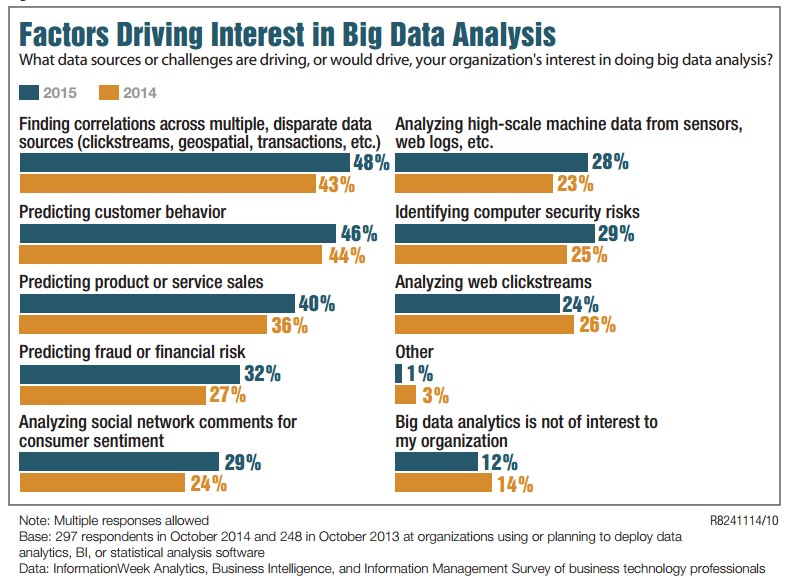
With that being said, however, relying too much on big data has its drawbacks. Beyond the fact that we're just starting to understand what's out there and how it's all relatable, big data should not be looked at as a marketing or customer service panacea. In fact, there are a lot of areas where relying too much on big data to better understand your customers can have the opposite effect, like these:
Lack of Availability
Let's say you're shopping online for a new pair of shoes. You're scrolling through pair after pair on your cell phone until you find the perfect pair. Unfortunately, they're backordered. You want to be notified when more are in stock, but you're not sure how to do that. You tap for customer service. You're invited to type in your question and see a list of canned solutions. That's a bit too cumbersome so you look for a way to contact a representative.
Instead, you're asked to submit your question to a helpdesk or online community. Trying to fill out a trouble ticket, you see that the service isn't compatible with mobile. You give up in frustration. Shortly thereafter, you get an email reminding you about the item you were interested in, and asking how the company can do better.
If you're visualizing a cartoonish response of steam coming out of your ears from anger and frustration, now you can imagine the limitations that big data has. Perhaps the only retailer to truly get a handle on big data at this level is Amazon, and they've been able to integrate unimaginable reams of data seamlessly while being able to grow and scale their company with consistency.

When the service you need isn't available, you grit your teeth for long wait times ahead, and test your patience with the poor rep that has to look up the details of the backordered product in a sea of potential choices. The point is, Big Data shouldn't just be pored over by analytics experts, but made available to everyone at every tier in the organization.
Rush to Judgment and Unrealistic Expectations
Big data is the foundation of a perilously-positioned scale. On one end, you have the camp that's rigid and inflexible. Things have always been done a certain way, and the deluge of big data isn't going to change that. These companies risk getting outmaneuvered by their more proactive competitors. They make hasty decisions that may not always be backed by data science, and then backpedal when things go south.
At the opposite end, there are those who are positively drowning in analytics. They're so swallowed up by data that they hesitate to make any decision without consulting the numbers like some kind of oracle. They shrug off their “gut feelings” or intuition because the data doesn't account for that.
There's no doubt that big data is changing the way we market, but as many industry trends go, it can easily be blown out of proportion into something it's not. People are complex, self-serving, habitual, ever-changing creatures. Trying to make sense of that is not something that can be done overnight. It requires careful planning, an understanding of the different “pools” of information the data is drawing from, and one's own understanding of their target market to fully grasp.
Otherwise you end up with complex, complicated decisions that are impossible to predict and frustrating to implement.
Data Modeling Difficulties
In order to get the most out of big data, it has to be modeled in order to bring the value it's so often associated with to customer service, which in turn trickles down to the customer. At its core, Big Data is raw, unfiltered and largely noise. It's not structured, organized or clean. The only system currently out there with the power to tackle such large scale information is Hadoop, which has been around since the early 2000s.

Currently there is no user friendly, on-demand and easily implementable enterprise data modeling system. There are many ways to tackle the big data noise, however, but many data models hit common obstacles including not being able to scale accordingly or organize the data in a sensible way, and still fewer work with existing analytics platforms and CRM information.
Just having the data is no longer enough. Making it accessible and understandable to everyone is the challenge today's modeling apps have to fix.
Pure Complexity
And finally, let's face it, we're only beginning to scratch the surface of what's out there. And yet it keeps growing and growing. Costs go down, availability of information goes up. Despite all its lucrative potential, big data can't replace people. When insights are gleaned from data scientists, they're passed on to managers and then employees. If there's not a process in place to better understand and leverage the information you continue to gain, it's practically worthless.
The bottom line with using big data to better understand your customers is that there's a lot of expectations of what it can or cannot do. With such a wave looming overhead, it's easy to want to stand back and wait. But just as the internet itself was once looked at as being “just a fad”, so too is big data poised to completely change what we know about our audience.
Being able to turn this information into insight is a challenge – but one worth tackling. We all know what happens when there's a rush to implement without a goal in mind. Knowing the issues ahead of time can help you plan out a strategy that takes all of these points into consideration as you all work together toward a common goal – making sure every customer is exceedingly satisfied, again and again.
What are Your Thoughts on Using Big Data to Better Understand Customers?
Do you think big data is still in its infancy with regard to its use in customer analytics? Or do you think we simply lack the tools and understanding to make the most of it? What tools are you currently using to make sense of the data you collect? Share your thoughts and comments with us below.
About the Author: Sherice Jacob helps business owners improve website design and increase conversion rates through compelling copywriting, user-friendly design and smart analytics analysis. Learn more at iElectrify.com and download your free web copy tune-up and conversion checklist today!
Find Success By Putting Your Digital Advertising to the A/B Test
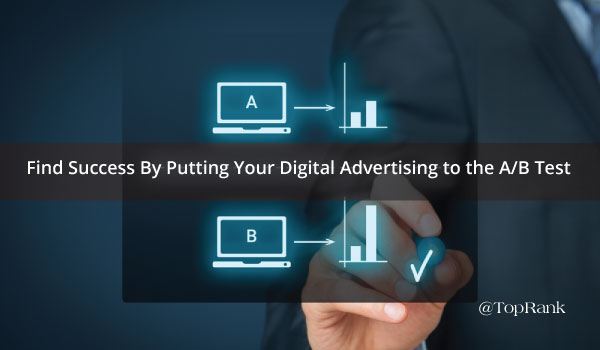
Testing different variations is one of the quickest ways to learn, and Digital Advertising is no exception. When you begin talking about A/B testing, many of us get nervous and all sorts of possible catastrophes begin swimming around in our heads.
But the truth is, advertising is a quickly evolving tactic, and in order to gain momentum, testing has become a necessity. Whether your advertising is social, display, native or search, the key to better results and return on investment is testing.
To help you navigate the sometimes-confusing world of digital advertising testing, we've provided some helpful resources below.
What is A/B Testing?
An A/B Test is simply a test between two variants, a control and a variation, or as Google likes to call it, an experiment. Examples might include creating two different:
- Landing Pages
- Assets
- Ads
How to Approach an A/B Split
An A/B split needs to be shown to the exact same audience, during the same times of day, same days of the week and in the same areas in order for you to have a firm grasp on which variation is truly performing better.
It's important to have a firm grasp on your data set or audience so that you can split the information and create an equitable ad deliver. You'll find that most platforms have options for testing including, Google AdWords, Analytics Experiments, Optimizely and Unbounce.
Considerations for Length & Time of Testing
In order to measure success, you need to make sure you're giving you tests enough time to run. We typically recommend running tests at a minimum of 2 weeks with most tests running for 1 month.
Volume
How much data is required for you to have statistically significant results? If your program sees low volumes (clicks, impressions, conversions), you need to run longer tests. If you have a high volume account you can call tests much faster.
Seasonality
If you have drastic peaks and lows due to seasonality, I suggest finding the middle ground for testing. I never recommend testing during a seasonal low unless you dealing with a high volume account.
Day of Week/Month Activity
Make sure that both groups have equal coverage during your peak days and weeks. Again, try to avoid running tests during your low periods, especially if you see significant swings in CTR and conv. rates.
It's also essential to make sure that your test is going to have impact. Sometimes slight copy variations and image changes aren't going to tell you much. You want to make sure the variant has a very clear goal and hypothesis. For example, by changing a button from “Download” to “Get My Guide”, I'm hoping to see a 10% lift in conversions.
What Types of Digital Advertising A/B Tests Should You Try?
When we implement digital advertising tests, they are directly tied to helping to meet program goals. Depending on the goals for your digital advertising program, we recommend launching the following types of tests:
Message Testing:
Test your messaging simple ad variations such as:
- Length of Message
- Promotional based Messaging vs. Informational Based Message vs. Benefit Messaging
- Various Ad Extensions
Changing a single word within your message normally doesn't lead to strong insights so make sure there is substantial change.
Below you'll find a couple of examples where we have tested different messaging tactics for significant engagement improvements.
Promotional Based Text Ads Driving Significantly Higher CTR's Than Benefit Messaging:

Benefit Based Text Ad Driving Significantly Higher CTR's Than Information Messaging:

Landing Page Element Testing
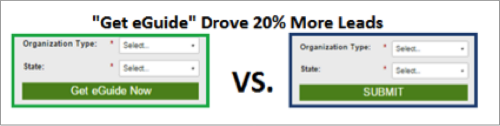
Testing different elements on your landing pages can lead to surprising results. Whether it's the layout, form fields or buttons, it's always important to experiment.
Below you'll see a simple button label change driving a major improvement in lead volume!
Imagery Testing
For social posts, display channel and landing pages, it is always good to test a couple of contrasting images, themes and concepts.
Especially if you have multiple audience personas, you'll want to know what type of visuals and graphics resonate best with your audience. Do you need to be straighter forward, does humor resonate with your audience, and does your audience like to see the product? Are certain concepts better for social than display? You'll discover these answers via testing.
Here's an example of a test we ran for a social campaign. #FuranceFail had a humorous twist that resonated much better with our social audience.

Make Informed Testing Decisions
Again, make sure you're testing has purpose, a hypothesis and a goal. If you've put serious thought into your A/B tests you won't be disappointed. While the outcome may not have been desired, now you know and knowledge is power.

Gain a competitive advantage by subscribing to the
TopRank® Online Marketing Newsletter.
© Online Marketing Blog - TopRank®, 2016. |
Find Success By Putting Your Digital Advertising to the A/B Test | http://www.toprankblog.com
The post Find Success By Putting Your Digital Advertising to the A/B Test appeared first on Online Marketing Blog - TopRank®.
Subscribe to:
Posts (Atom)